Catch exceptions the
day they land
Decide once what counts as a problem, whether it be margin below a certain floor, volume falling off, or lower than average revenue for a given product or location. From then on it's caught the day it happens, while it's still cheap to fix.
Set it once
Flag the greatest challenges facing your business and never let them go unnoticed again
- Sharp dropRevenue 40%+ below 3-month average
- Slow declineRevenue down 15% vs previous month
- Unprofitable monthProfit below zero
Account 1042 is 44% below its 3-month average. Issue opened and assigned.
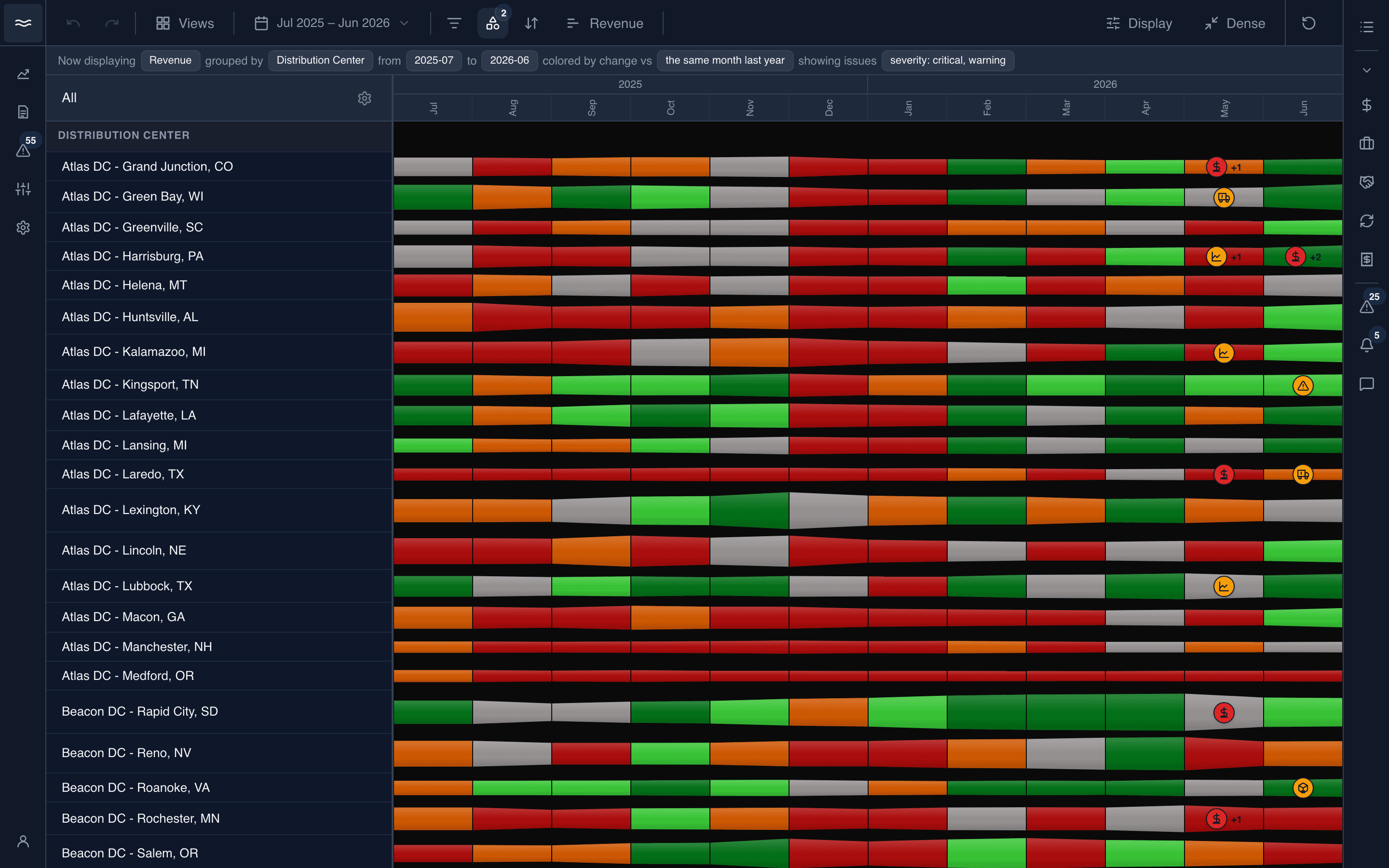
Every exception lands on the cell that caused it
Not a separate queue you have to remember to open. What a rule finds is marked on the account and the month it happened in, so the exception and the number it came from are the same place.
Trust from day one
See everything a rule would have caught over the past year before you turn it on so the team trusts the alerts instead of tuning them out.
Only what you need
Each problem lands with the right person at the right priority so a single problem doesn't derail the whole team.
Edit without a backlog
People who own the number adjust their own checks, meaning the rules keep up with how the business actually runs.
Stop finding problems at month-end
Issues surface the day they post, assigned to the person who can fix them.